Why write?

"If you don’t write, you can’t really be aware of who you are. Not even mentioning of who you are not."
Pascal Mercier

Monday, 30 July 2012

Butterfly dress

Things that we haven’t done are the most splendid. The conversations that never took place, the gestures, withdrawn at the last moment, the songs we never sang, the books never written, the letters never sent. The words we never uttered. The dresses we never wore, hanging in the closet, waiting for the once-in-a-lifetime occasion.

All those are the greatest things on earth. They start with “If only I had…” followed by a past participle. Here begins a journey to perfection. But there are two main sorts: a moaning and a dreamy variant. It makes a huge difference which one you adhere to.

In a moaning variant you believe that it was possible and even highly recommendable to do, say, sing, write or wear the things that, by some awful twist of fate, lack of courage or insight, you finally did not attempt. In the long run it makes you feel useless, flawed, guilty, incompetent or unfortunate. One day you just give up, and stop believing in the possibility of getting there: meeting that person, having that conversation, singing that song, getting into that size…
 The dreamy variant assumes that all those things be better left in the realm of potentiality. It doesn’t mean giving up however – it only perpetually postpones the moment supreme. As a consequence, you’re always hanging there with your paw above the jar of honey, but never dropping it into the liquid (and better so, as this honey, continually postponed, must be way past its “best before” date). If you’re a proponent of the dreamy variant, you live in a state of constant anticipation of the greatest moments of all.

I should have worn my butterfly-print dress that evening… there was a gentle breeze on the coast…they would have taken off from the fabric, fly away and never come back… I’d watch them disappear in the dunes. I’d be left with a plain white dress instead, unfinished, holding a promise of perfection.

My best blog entry will be blank.

Saturday, 28 July 2012

Frequent Flyer Witch programme

Ever since I discovered the power of little black symbols on a white background, I’ve used every opportunity to jot a few of them down. I loved the touch of the fountain pen on a sheet of paper. I loved the ticking of an old-fashioned Remington typewriter, and the magic with which it transformed a hand-written page into something official, something book-like.

I’ve always been claiming, however, that I didn’t care about actually becoming  someone starting with a W, as the passion is in the doing, not the becoming.

But now I realise this wasn’t entirely true: there is at least one good reason to wish to be able to legitimately call myself something starting with a W. The reason comes from Chapter 55 of “The French Lieutenant’s Woman”, my beloved novel by John Fowles. The protagonist, Charles, is sitting in an empty train compartment, craving for solitude to reflect on the crisis he’s going through. Unfortunately, that won’t be long – there enters a particularly annoying stranger. A man in his forties, prophet-bearded, with an aura of confidence about him: “if not quite confidence in self, at least a confidence in his judgment of others, of how much he could get out of them, expect from them, tax them.” The man’s stare “became positively cannibalistic in its intensity”, expressing “a desire to know you in a way you do not want to be known by a stranger. In my experience there is only one profession that gives that particular look”.  That “positively cannibalistic” man is the writer himself, as is revealed a few sentences further.
What a great occupation that  is, one that gives you the right to stare voraciously at strangers and ask them inquisitive questions like: who are you? Have you found the sense of life yet? What is your one favourite food ingredient? Do you iron your own shirts yourself?

 I’ve always loved to ask those questions to strangers, to cut them open like you cut open the pages of some virgin books - but my problem is that I don’t always dare. Sometimes I’m paralysed by the fear of judgment they might make of me.  Chances are that they will suspect I want to abuse them, misuse them, earn money on them, talk them into something or plain seduce them. Sometimes they think I’m lesbian. Sometimes they think I’m looking for a one night stand (therefore, if it’s inquisitive questions or voracious stare your after - it's usually safer to attempt it in the morning. The chances that the stranger might suspect  you of being  a one-night-stand -hunter are smaller, as only extremely motivated people or extremely careful planners  begin their hunt already in the morning.)
But if I could legitimately call myself a name starting with a W, then I’d suddenly find myself beyond all suspicion. People would cheer up, feel at ease, and eagerly share their stories with me. At least, this is what I believe, as I've never tried this method so far.

And use them - I would indeed. Though probably without them noticing, and they certainly wouldn't be at a loss at all - not abused, not misused, not talked into something - only gently coaxed into telling me their story. You never know who's sitting next to you unless you start to talk.
You will never know if the serious-looking guy at the next table irons his own shirts, unless you ask. But why would  I want to know that in the first place? I don’t know. It just came to my mind suddenly, it popped up as the conversation unfolded. Within ten minutes or so I met two grown-up and be-wifed (married) men who assured me they do iron their own shirts and that they liked it that way. One of them even had the courage to give his testimonial on a video. I keep it on my phone and cherish the memory of it as a very special moment. The moment when I decided to become A WITCH.
I've decided I’ll ask all approachable strangers if they iron their shirts by themselves. It will go like this:
-          Excuse me, sir, do you mind if I ask you just one question? – no doubt the stranger will inspect me suspiciously, wondering  “What does she want from me?”, but saying probably something like this:
-          Ok, but just a short one. I’m in a bit of a hurry.
-          I’ll be short, I promise. You know, I’m a witch, and I’m currently doing some research for my new piece. Would you mind telling me if you iron your own shirts?

 I'll do it more often. I'll call myself a name. People find names so comforting. I'll introduce myself as a humble and hungry witch. A BeWitch. A Witch waiting to be BeWitched by your story.

Thursday, 26 July 2012

Before, now or then?

What is better? The anticipation, the moment itself, or the memory of it? I know someone who claims it’s the moment, and would even dare disagree with Winnie-the-Pooh. I find it an absolute disgrace to Pooh, who might be a bear of very little brain, but he does know something about a little something (which usually is honey in his particular case). And if he claims it’s anticipation – anticipation be it. I’m not going to disagree, because Pooh is a friend of my brother Rabbit, and if he’s a friend of my brother, he’s also a friend of mine. Disagree – it’s not what you do to friends, is it?

But, wait a second… How about a Very Nice Surprise which was a surprise? So you couldn’t possibly anticipate it, and that’s why it was soooo nice? Would the moment itself win in such cases, as there was no anticipatory pleasure? No, no, in a rare case like that (as Very Nice Surprises are scarce in this world saturated with careful planning) it’s the memory that becomes better than the Very Nice Surprise. (In Pooh’s terms: if he run out of honey, and a friend of him unexpectedly offered him a new jar filled with the golden liquid, recalling the moment of getting the jar would win with the actual getting and emptying it).  With time passing by, the memory swells and grows, the moment becomes even more poetic or spectacular, the pleasure – divine. You forget that your feet were sore and that the air was a bit too cold, and that it was a little late, and you had a perspective of a very short night and a very tiring red-eye day awaiting you. What stays is the essence – now polished, embellished and stylishly framed.
That someone I know still claims she prefers the moment above all memories or anticipations. And as she’s telling me that, I ask her to tell me her favourite story. And I listen, and it’s great indeed, full of thrills: wind in her hair and sand in her shoes, a moon like a slice of an orange, and a hand in a stranger’s hand. I listen with an open mouth, and begin to wish I was there, too. I picture the wind in my hair, the sand in my shoes, the moon like a slice of an orange and my hand in a stranger’s hand. I’m almost convinced – that moment truly was exquisite!

But it’s not happening now, my dear! It’s just a memory.
You’d need to try and convince me once again. Empirically. Take me there with you next time.

Monday, 23 July 2012

Vantage point

Does this picture have  anything in common with space travel? I'll show you it does:

When I read an interview with André Kuipers, a Dutch physician and astronaut who recently came back to Earth after more than six months in space, what struck me the most was the description of the interior of the station itself. Not so much the equipment and facilities, but the fact that each time you enter a module you need to reassess your position. There is no point of reference, no absolute “floor” or “ceiling”.  Depending on the way you enter, you may find the stationary bike on the ceiling, or a toilet on the wall. No need to panic – you just reposition yourself to fit the situation. For instance, if you need to exercise, you turn “upside down” (which is not the right expression anyway, as there’s no absolute “up” or “down”), and if you need to use the toilet, you turn in such a way that the wall becomes your floor. It makes little sense to protest “Who the hell has moved the toilet again?!”, as it’s common knowledge on the International Space Station that it’s you who moved, not the toilet.

Now, this might be relatively easy to accept and adjust to if you are on a space station, but in our life on Earth it’s rarely the case. We’re so used to our gravitational field that we don't even notice it (I'm delighted to hear though that the cries of the Higgs particles "we're here!" have recently been recognized, which probably won't change the reckless, matter-of-fact attitude most of us have to the wonders we're immersed in anyway). Our world is so full of established certainties (up-down, east-west,  right-left) that we don’t even attempt to imagine that it all could be different. Worse even, we extrapolate those certainties onto other, non-directional, domains. We tend to know better what should be where, who should be doing what, what others should think/feel/say… After all, the ground is on the ground and the skies are in the skies. Sometimes we step into a situation and know directly it is no good and needs to be changed.
 “My stationary bike on the ceiling?! – no way!”
“My husband/wife/partner is leaving me?! – no way!”

I’m not comparing husbands to stationary bikes, nor am I a promoter of divorce. What I want to say is that sometimes it’s not the surroundings that have secretly been adjusted against your will, but you yourself that has entered the module in a different way (e.g. upside down, or with wrong expectations).
The interview with Mr. Kuipers has been a great inspiration. Next time I’m greeted by a colleague with a grumpy half-hallo, instead of getting upset, I’ll leave the office and re-enter it a moment later. Upside down.

Sticking to your own vantage point may be a great disad-vantage.

Thursday, 19 July 2012

Message to Posterity (on the use of paper cups)

Somewhere in the second decade of the 21st century, KLM stopped using Styrofoamcups to serve their warm drinks. Those were replace by a new variety, a cooperation with the company called `Blond` from Amsterdam. Whatever its name could suggest, the company wasn´t stupid at all.

Those KLM `Cup of Blond` cups were made of paper and some natural additives. Therefore, when you drank your tea, there no longer was an artificial Styrofoam fragrance getting into your nostrils. No, when your nose got immersed in the savoury vapours, what you detected was this sweet, subtle smell of paper, the smell of good old fashioned BOOKS!

For those who think I made a typo here, and forgot to add an “e” in front – let me explain what I mean. Books are the ancestors of your e-variety. Instead of the words being displayed on a screen, they were printed on paper. Such books were always in flight-mode. You turned the pages, instead of scrolling. They included no interaction: no hyperlinks, no search buttons. If you needed to mark a fragment, you simply used a pencil, a bookmark or a post-it note. You might have seen some elderly people still browsing through them, shyly hidden in the corner. Do you get the picture?
Such books had a smell of their own. That fragrance was different depending on the kind of paper used, the age of the book, storage conditions, the perfume used by the reader, the conditions in which it was read (a book that had been dropped in an ocean smells different than an un-dropped one, even after drying) and many other factors. They made sounds – some of them cracked when opened, there was a gentle sound of rustling, there was the slight “bang” of closing the volume... (incase of large volumes, it became a … big bang). And, above all: they whispered when you turned the pages. They did. Whisper, this is what books did if you listened carefully.
When you just began reading, there was this lightness between the fingers of your left hand, and heaviness in the right one. As you approached the middle, the thickness on your left hand side increased. It was a very pleasant feeling. You knew you were past the middle if the fingers of your right palm had less and less to hold.
Towards the end, came the moment supreme – only a few pages left in your right hand. You felt the thrills down your spine – justa few more minutes, and you could close it, put it back, and run your index finger through the backs of the volumes in the bookcase (that’s a kind of a cupboard or wardrobe, but used for storing books instead of pottery or clothes). Only a few moments separating you from choosing your next destination, and that moment truly was thrilling… Winnie-the-Pooh got it right long ago: “… there is a moment before you begin to eat it which is better than when you are”.
Those books had one more advantage above the e-variety: their title and author were printed on the cover, so with just a little effort you could usually see what others were reading. That initiated many intriguing contacts with fellow human beings.
But I guess you can’t be missing something you’ve never smelled, can you? You certainly wouldn’t mind the fragrance of a plastic cup or an e-reader… You don't know any better, do you?

Sunday, 15 July 2012

Theory of creativity

"People think of creativity as if it was magic. It's not. It's just seeing links that aren't obvious, and the rest is hard work".
These are the words of my chance fellow-traveller I met on board a plane a year ago. He was asleep above a page full of formulas. I don't understand pages full of formulas. I need to see it in words. But he was asleep, and I couldn't wait till he wakes up. I just HAD to know what they were about.
 I used the opportunity when the stewardess woke him up to ask something probably very important (like: would you like coffee or tea, sir?) I fired my question straightaway, maybe too straight for a man that has just woken up: "is this physics?" he looked at me, almost shocked. "I'm so sorry, sir, I didn't mean to be rude, it's just that I rarely see people reading formulas on the plane. Are you a physicist?". "Oh, no problem. I just didn't expect that. Yes, I'm a theoretical physicist." he said. "What is it that you do, as a theoretical physicist?" "I develop models describing interaction between elementary particles". ("he's a poet, I thought")

What followed was probably the most interesting conversation I ever had on a plane. The time flew by, I almost didn't notice the landing.

All this brought me, metaphorically, closer to understanding the theory of relativity. This is what metaphors do: create links that aren't obvious.

Thank you, Mr. Unknown by name. Are there many clouds above CERN? There's no statistics that I know of to prove it, but my personal last-minute theory is that clouded skies boost creativity. If there are no clouds, you can't possibly be in them.

Friday, 13 July 2012

Human(t)hill

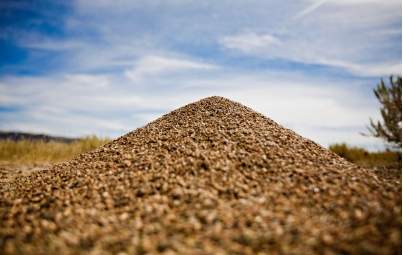
It’s very busy in and around an anthill. There’s work to be done: food and construction material to collect, underground corridors to dig, organic stuff to digest, there’s a female to be fertilised, there are eggs to be taken care of, there are larvae to be fed and a security check to be performed.

If someone purposefully puts a stick into their habitat, there’s panic for a while, but soon they come to terms with the losses: they attribute it to a natural disaster and proceed to cleaning up the mess and rebuilding their home. I never heard them moaning “God, how could you have allowed this to happen?”
If someone steps with his shoe into their hill, by accident, they do the same as above: escape, return, rebuild, and if not possible – move somewhere else. Life goes on.

They have a world of their own and they believe it’s the only one. Oh yes, I hear there have been exceptions. There've been some prophets among them, who experienced powerful visions of mighty creatures stepping into their hill, or pouring hot water into their corridors in order to drown the inhabitants. But a vast majority of ants are anti-prophetic. They are pro-labour. They dislike philosophies. Their prophets were fed into the mouths of the young. Nothing got wasted.
Therefore, ants don’t know we exist.

It’s very busy in and around a humanthill. How much do we know about the world beyond it?